
- ISO/IEC 17025:2017 Accredited Engineers
- End-to-End Project Management Available
- GxP-Compliant Decommissioning Documentation
- Chain of Custody Records for Every Instrument
- Full IQ/OQ/PQ Qualification at New Site
- NIST-Traceable Recalibration After Relocation
- Regulatory Compliance Maintained Throughout
- Nationwide Coverage — Any Lab, Any Instrument
Move Your Lab Without Losing Your Compliance Standing
From Pre-Move Assessment to Post-Move Qualification
Lab moves are more than a logistics challenge — they are a regulatory event. Every instrument that moves must be properly decommissioned, its calibration status documented, its chain of custody maintained, and its qualification re-established at the new site. Femto Scientific manages every phase with a single documentation package and the same engineers from our ISO/IEC 17025 accredited laboratory who calibrated your instruments originally.
A Structured Three-Phase Process
Each phase produces stand-alone documentation suitable for regulatory audit use. All three phases together form a complete change control package for GxP and FDA-regulated environments.
- Phase 1 — Decommissioning As-found calibration status captured and documented before any disconnect. GxP-compliant equipment shutdown procedures followed per manufacturer guidance. Crating and packaging specifications prepared for sensitive instruments. Asset inventory updated and chain of custody formally initiated.
- Phase 2 — Transport & Custody Documented chain of custody maintained throughout transit. Condition monitoring requirements identified for temperature-sensitive, vibration-sensitive, and precision instruments. Receiving-site delivery verified against inventory and condition records before any unpacking begins.
- Phase 3 — Recommissioning & Qualification Installation Qualification (IQ) confirms the instrument is correctly installed in the new location. Operational Qualification (OQ) verifies performance within specification under new site conditions. Performance Qualification (PQ) confirms fitness for intended use. NIST-traceable recalibration certificates issued with updated site information. Change control documentation package delivered.
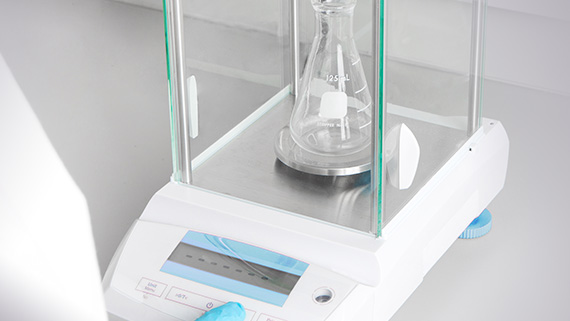

Decommissioning — Protecting Your Compliance Record Before the Move
A proper decommissioning creates the audit trail that proves your instruments were in a known-good state at the time of the move and were handled in a controlled, documented manner. Without it, your regulatory standing at the new site starts from zero.
- As-found calibration status documentation
- GxP-compliant shutdown and lock-out procedures
- Crating and packaging specifications per instrument type
- Equipment master record and inventory update
- Chain of custody documentation initiation
- Calibration certificate records transfer
- Pre-move risk assessment for sensitive equipment
- Regulatory notification support where required
Recommissioning & Qualification at the New Site
All four qualification activities are performed sequentially and documented in a single bound package. Protocols are written to instrument-specific requirements and GxP best practices.
- Installation Qualification (IQ) Verify the instrument is installed correctly at the new site — utilities connected, clearances met, environmental conditions within specification, and all components present and undamaged per manufacturer requirements and GxP standards.
- Operational Qualification (OQ) Confirm the instrument operates within its specified performance range under the new site conditions — all functions tested against written acceptance criteria with full pass/fail documentation.
- Performance Qualification (PQ) Verify the instrument performs to the required standard for its intended use in the new location — protocol-driven testing using representative samples or reference standards, with acceptance criteria matched to your application and regulatory framework.
- NIST-Traceable Recalibration & Updated Certificates ISO/IEC 17025 accredited calibration performed at the new site immediately after PQ. Updated certificates issued with new location, site address, and responsible contact information — no gap in your calibration record.
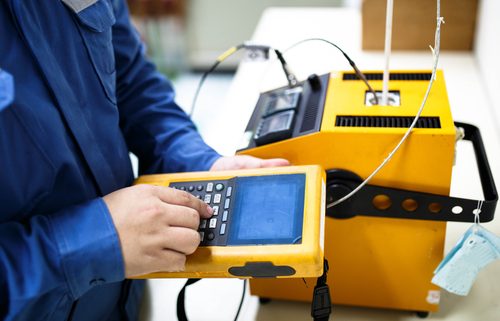
Documentation and safe shutdown for instruments being moved, stored, or retired — without immediate recommissioning at a new site.
Unsure which scope fits your project? Most regulated facilities require the full package. Contact us for a project assessment at no obligation.
| What’s Included | Decommission Only | Recommission & Qual | Full Relocation |
|---|---|---|---|
| Pre-Move Instrument Assessment | ✔ | – | ✔ |
| As-Found Calibration Status Documentation | ✔ | – | ✔ |
| GxP-Compliant Shutdown Procedure | ✔ | – | ✔ |
| Chain of Custody Records | ✔ | – | ✔ |
| Crating & Packaging Specifications | ✔ | – | ✔ |
| Transport Condition Monitoring Guidance | ✔ | – | ✔ |
| Installation Qualification (IQ) | – | ✔ | ✔ |
| Operational Qualification (OQ) | – | ✔ | ✔ |
| Performance Qualification (PQ) | – | ✔ | ✔ |
| NIST-Traceable Recalibration at New Site | – | ✔ | ✔ |
| Updated Calibration Certificates (New Site) | – | ✔ | ✔ |
| Change Control Documentation Package | – | ✔ | ✔ |
| Single Project Manager (End-to-End) | – | – | ✔ |
Full Relocation Management includes a dedicated project manager who coordinates scheduling, documentation, and communication across all phases — single point of contact from pre-move assessment through final certificate delivery.
Instruments & Equipment We Relocate
Our engineers are qualified across the full breadth of regulated laboratory instrumentation. If it requires calibration, it requires a decommissioning and recommissioning protocol when it moves.
- Analytical Balances & Precision Scales
- Single- & Multi-Channel Pipettes
- Centrifuges
- CO2 Incubators & Shaking Incubators
- Biosafety Cabinets & Fume Hoods
- Refrigerators, Freezers & Ultra-Low Freezers
- HPLC & Chromatography Systems
- UV-Vis Spectrophotometers & Microplate Readers
- pH Meters & Electrochemical Analyzers
- Thermal Cyclers & PCR Systems
- Environmental Monitoring Systems
- Temperature & Humidity Chambers
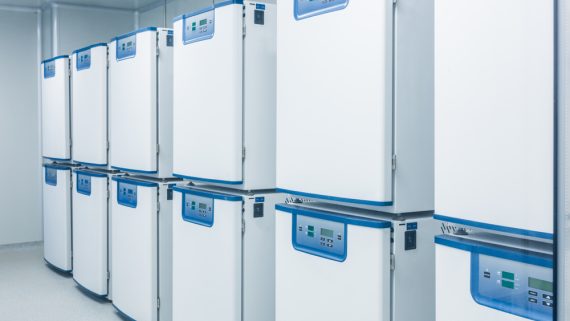
Why Labs Choose Femto Scientific for Asset Relocation
One provider, one documentation package, one unbroken chain of custody from decommissioning through final qualification. No handoffs between vendors and no gaps in your regulatory record.
Your instrument’s regulatory standing is actively maintained through every phase of the move. The same engineers from our accredited laboratory who know your instruments perform the decommissioning and post-move qualification.
Accredited calibration is performed at the new location immediately after qualification — updated certificates reflect the new site address and contact information. No separate calibration vendor required.
On-site teams available across all major U.S. laboratory markets. Remote project coordination available for multi-site consolidations. Same ISO 17025 engineers regardless of origin or destination.
Compliance-Ready for Your Regulatory Framework
Instrument relocation is a change event under every major life-science regulatory framework. Femto Scientific’s documentation packages are structured to satisfy audit requirements from the moment the first instrument is disconnected to the final certificate at the new site.
GxP Change Control
Instrument relocation is a GxP change event requiring a documented impact assessment, change control record, and deviation handling if any instrument is found out of specification during decommissioning. Femto Scientific’s relocation packages are structured to integrate directly into your site’s change management system and are acceptable to FDA and EMA auditors.
FDA 21 CFR Part 11
All relocation documentation — decommissioning records, IQ/OQ/PQ protocols, calibration certificates, and chain of custody logs — is produced as electronic records with complete audit trail. Timestamped, engineer-identified, and formatted for 21 CFR Part 11 review. Paper copies also available for facilities that require them.
CAP & CLIA Facilities
Clinical laboratories accredited by CAP or operating under CLIA must maintain documented instrument qualification records during and after relocation. Our IQ/OQ/PQ packages satisfy CAP checklist requirements and CLIA instrument qualification standards — with calibration certificates issued by an ISO/IEC 17025 accredited laboratory.
Laboratory Asset Relocation by Regulatory Environment
Compliance-focused guides to decommissioning, chain of custody, validated transport of sensitive instruments, and IQ/OQ/PQ recommissioning after a move — written for your regulatory framework, whether you run a pharmaceutical cGMP operation or a CAP/CLIA clinical laboratory.
Frequently Asked Questions About Laboratory Asset Relocation
Decommissioning is the formal process of documenting an instrument’s as-found calibration status, following GxP-compliant shutdown procedures, and initiating the chain of custody records before the instrument is disconnected, crated, or moved. It is required by GxP, FDA, CAP, and CLIA frameworks because a move is a change event — the regulatory record must show that the instrument was in a known state immediately before the move and that handling was controlled throughout. Without a formal decommissioning, you cannot demonstrate that any out-of-tolerance condition found at the new site occurred during transit rather than before the move.
Most regulated environments require a full IQ/OQ/PQ sequence after relocation. Installation Qualification (IQ) verifies the instrument is installed correctly in the new environment. Operational Qualification (OQ) confirms it operates within its specified range under the new site conditions. Performance Qualification (PQ) verifies fitness for its intended use. In addition to these qualification activities, NIST-traceable recalibration with updated site-specific certificates is required so that calibration records reflect the current location. The specific qualification protocols and acceptance criteria are determined by the instrument type, the regulatory framework, and your site’s quality procedures.
Yes. Calibration certificates reference the location where the calibration was performed. After an instrument moves to a new site, a new calibration certificate must be issued reflecting the new location, site address, and responsible contact. More importantly, the physical conditions at the new site — temperature, humidity, altitude, vibration, and utility quality — all affect calibration performance. Femto Scientific performs a full NIST-traceable calibration at the new location as part of the recommissioning process, ensuring the certificate is accurate for the actual operating environment of the instrument at its new address.
Timeline depends on the number of instruments, their types, and the distance and complexity of the move. A single high-priority instrument (such as an analytical balance or HPLC system) can typically be decommissioned, transported, and recommissioned with full IQ/OQ/PQ within two to four business days once both sites are ready. A full laboratory relocation involving multiple instrument types may require several weeks of coordinated scheduling. Femto Scientific provides a detailed project schedule as part of the initial assessment so that your facility planners and regulatory team have accurate timelines before the move begins.
Most laboratory instruments can be safely decommissioned, relocated, and recommissioned with appropriate handling. Instruments that require special consideration include fixed biosafety cabinets or laminar flow hoods that are ducted into building HVAC systems (which require separate contractor work before decommissioning), large analytical instruments with factory-installed components that require manufacturer service for any physical relocation (such as certain mass spectrometers and NMR systems), and cryogenic storage systems that require careful planning around the cryogen inventory. During the initial assessment, Femto Scientific identifies any instruments with special handling requirements and incorporates those requirements into the project plan before any work begins.