
Femto Scientific relocates clinical and diagnostic laboratories with the documentation a CAP surveyor and CLIA program expect — decommissioning with as-found status, documented chain of custody, cold-chain-aware transport of reagents and specimens, and IQ/OQ/PQ re-qualification with NIST-traceable recalibration so your analyzers, centrifuges, refrigerators, and incubators return to service verified and survey-ready.
- Documented decommissioning with as-found status
- IQ/OQ/PQ re-verification at the new site
- NIST-traceable recalibration after the move
- Survey- and inspection-ready documentation
- Analyzer & instrument move coordination
- Cold-chain planning for reagents & specimens
- Documented chain of custody end-to-end
- Downtime planning to minimize testing gaps
Relocate your clinical lab and keep every instrument survey-ready on arrival.
Relocation Requirements for CAP and CLIA Clinical Laboratories
Clinical laboratories accredited by the College of American Pathologists (CAP) or operating under CLIA must maintain documented instrument qualification and calibration records through a move — and re-verify performance before returning an instrument to patient testing. A documented decommissioning, chain of custody, and IQ/OQ/PQ recommissioning workflow is the cleanest way to demonstrate that competency for every analyzer, centrifuge, refrigerator, and incubator that moves.
CAP Survey Readiness
CAP checklists require calibration and qualification records for instruments used in patient testing. Our relocation package documents the as-found status at decommissioning, the chain of custody through transit, and the IQ/OQ/PQ re-verification and NIST-traceable recalibration at the new site — exactly the records a surveyor expects to see after a move.
CLIA 42 CFR 493 & Re-Verification
CLIA requires instruments to be maintained and calibrated per manufacturer and quality-standard specifications, and performance must be re-established after a relocation. We coordinate analyzer moves and re-verification so calibration verification and, where applicable, method validation can be completed before the instrument resumes reporting patient results.
Downtime & Cold-Chain Planning
An unplanned move can interrupt testing and compromise temperature-sensitive reagents and specimens. We build a downtime plan around your critical assays and specify cold-chain handling and condition monitoring for refrigerated and frozen inventory, so the move minimizes testing gaps and protects reagent and specimen integrity.
A Documented Move, Not Just a Reinstall
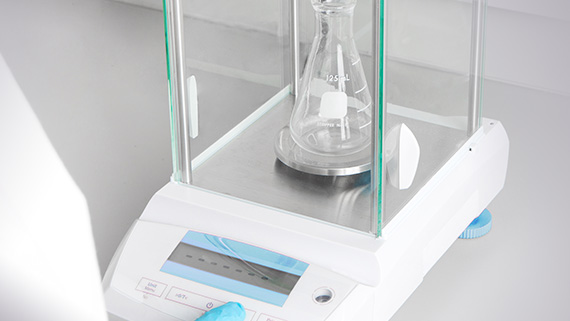
Powering an analyzer back on at a new site is not re-verification. A compliant clinical relocation decommissions each instrument with its as-found status, moves it under documented custody with cold-chain protection where needed, and re-qualifies it with IQ/OQ/PQ and NIST-traceable recalibration before it returns to patient testing.
- As-found status & documented decommissioning
- Chain of custody through transit
- Cold-chain handling for reagents & specimens
- IQ/OQ/PQ re-verification at the new site
- NIST-traceable recalibration & updated certificates
- Downtime plan to minimize testing gaps
Review the full scope and service tiers on the laboratory asset relocation service page, or add continuous ARTEMIS remote temperature monitoring for the cold storage your relocated clinical inventory depends on.
CAP & CLIA Laboratory Relocation FAQs
Most regulated environments require a full IQ/OQ/PQ sequence after relocation. Installation Qualification (IQ) verifies the instrument is installed correctly in the new environment. Operational Qualification (OQ) confirms it operates within its specified range under the new site conditions. Performance Qualification (PQ) verifies fitness for its intended use. In addition to these qualification activities, NIST-traceable recalibration with updated site-specific certificates is required so that calibration records reflect the current location. The specific qualification protocols and acceptance criteria are determined by the instrument type, the regulatory framework, and your site’s quality procedures.
Timeline depends on the number of instruments, their types, and the distance and complexity of the move. A single high-priority instrument (such as an analytical balance or HPLC system) can typically be decommissioned, transported, and recommissioned with full IQ/OQ/PQ within two to four business days once both sites are ready. A full laboratory relocation involving multiple instrument types may require several weeks of coordinated scheduling. Femto Scientific provides a detailed project schedule as part of the initial assessment so that your facility planners and regulatory team have accurate timelines before the move begins.
Yes. Calibration certificates reference the location where the calibration was performed. After an instrument moves to a new site, a new calibration certificate must be issued reflecting the new location, site address, and responsible contact. More importantly, the physical conditions at the new site — temperature, humidity, altitude, vibration, and utility quality — all affect calibration performance. Femto Scientific performs a full NIST-traceable calibration at the new location as part of the recommissioning process, ensuring the certificate is accurate for the actual operating environment of the instrument at its new address.
Most laboratory instruments can be safely decommissioned, relocated, and recommissioned with appropriate handling. Instruments that require special consideration include fixed biosafety cabinets or laminar flow hoods that are ducted into building HVAC systems (which require separate contractor work before decommissioning), large analytical instruments with factory-installed components that require manufacturer service for any physical relocation (such as certain mass spectrometers and NMR systems), and cryogenic storage systems that require careful planning around the cryogen inventory. During the initial assessment, Femto Scientific identifies any instruments with special handling requirements and incorporates those requirements into the project plan before any work begins.
Chain of custody is a continuous, documented record of who handled each instrument, when, and in what condition, from the moment of decommissioning through delivery and recommissioning at the new site. Femto Scientific initiates the chain of custody during decommissioning — recording each instrument’s asset ID, serial number, and as-found condition — and maintains a formal handoff record at every transfer of responsibility, including the point at which instruments are released to your approved movers. On arrival, deliveries are verified against the inventory and condition records before any unpacking begins, so any discrepancy or transit damage is identified and documented immediately. This unbroken record is what allows a GxP, FDA, CAP, or CLIA auditor to trace an instrument’s handling across the entire move and confirm that no undocumented event could have affected its qualification status.
Keep Your Clinical Laboratory Survey-Ready Through the Move
Send us your instrument and analyzer list, destination, and critical-testing constraints — we’ll return a relocation plan with downtime scheduling, cold-chain handling, and IQ/OQ/PQ re-verification that keeps your laboratory inside CAP and CLIA requirements.