
Prove Your Controlled Environment Meets Specification — Every Time
Femto Scientific performs temperature and humidity mapping studies for pharmaceutical storage, clinical laboratories, and controlled research environments. NIST-traceable calibrated data loggers. Full IQ/OQ/PQ documentation packages. Results you can present to an FDA inspector on day one.
Request a StudyTemperature & Humidity Mapping by Industry
Compliance-focused guides to temperature and humidity mapping — sensor placement and count, empty and loaded studies, seasonal mapping, and the IQ/OQ/PQ report package — written for your setting, whether you qualify GMP pharmaceutical storage or run a CAP/CLIA clinical laboratory.
What Is Temperature and Humidity Mapping?
Temperature and humidity mapping is a qualification study that characterizes the spatial distribution of environmental conditions throughout a controlled area — verifying that every point within a storage unit, warehouse, cleanroom, or environmental chamber meets its specified conditions under real operating parameters.
The study uses multiple calibrated data loggers placed at defined positions throughout the space. Data is collected continuously over the study period — typically 24 to 168 hours — capturing temperature and humidity readings that are then analyzed statistically to determine whether the unit or space is performing within its acceptance criteria.
The final output is a written report that documents the study protocol, sensor placement rationale, raw data, statistical summary, and a pass/fail determination. This report becomes part of your equipment qualification package and is available on demand for FDA inspections, CAP/CLIA audits, and GxP compliance reviews.
- ISO/IEC 17025 Accredited Laboratory
- NIST-Traceable Calibrated Data Loggers
- Multi-Point Sensor Placement
- IQ/OQ/PQ Documentation Package
- FDA, USP, WHO, and GMP Compliant
- Pass/Fail Against Your Acceptance Criteria
What Femto's Mapping Study Includes
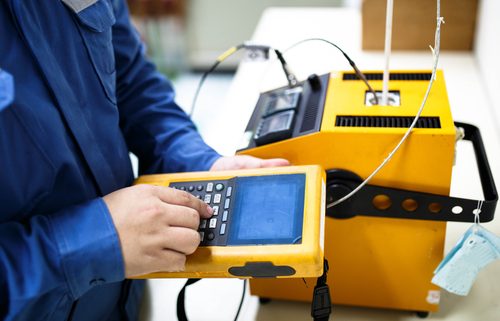
Every mapping study Femto Scientific performs is conducted with calibrated, NIST-traceable data loggers and documented to meet the requirements of FDA 21 CFR Part 211, USP <1079>, and WHO GDP. The study package includes:
- Pre-study consultation and requirements review
- Written study protocol with sensor placement rationale
- Calibrated NIST-traceable data loggers
- Multi-point sensor placement diagram
- Continuous data collection over defined study period
- Empty and loaded condition testing (as applicable)
- Door-open and power-failure excursion testing
- Statistical analysis of all measurement points
- Identification of hot spots, cold spots, and gradient zones
- Pass/fail determination against acceptance criteria
- Corrective action recommendations if out of specification
- Full IQ/OQ/PQ written report package
Equipment and Environments We Map
- Ultra-Low Temperature Freezers (−80°C) Mapping studies for ULT freezers used in biological sample storage, verifying uniform temperature distribution throughout the chamber under operational load conditions.
- Refrigerators and Standard Freezers (+2°C to +8°C / −20°C) Pharmaceutical and clinical refrigerators storing vaccines, blood products, reagents, and temperature-sensitive materials — mapped to WHO PQS and USP requirements.
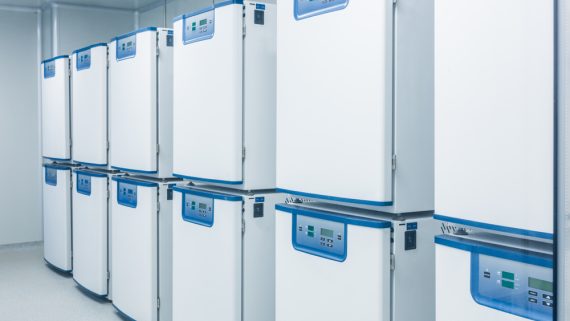
- CO2 Incubators and Environmental Chambers Temperature, humidity, and CO2 distribution mapping for incubators and controlled environment chambers used in cell culture and stability testing.
- Stability Chambers and Walk-In Cold Rooms ICH Q1A-compliant mapping of stability chambers and large-format cold storage spaces, including load configuration studies and seasonal challenge testing.
- Cleanrooms and ISO-Classified Spaces Temperature and humidity distribution mapping for ISO-classified cleanrooms, compounding areas, and controlled manufacturing environments.
- Laboratory Ovens, Autoclaves, and Sterilizers Heat distribution and temperature uniformity mapping for ovens, forced-air dryers, autoclaves, and steam sterilizers used in sterilization validation programs.
Regulatory Standards and Compliance Frameworks
Femto Scientific's mapping studies are designed to satisfy the documentation requirements of the following regulatory and quality frameworks. Our reports are written in a format directly suitable for submission to regulatory inspectors and accreditation auditors.
- FDA 21 CFR Part 211 (GMP) Pharmaceutical manufacturers must document that storage conditions are maintained within specified limits. Mapping studies provide the spatial verification data required by cGMP regulations.
- USP <1079> — Good Storage and Distribution Practices USP 1079 requires that storage facilities be shown to maintain temperature uniformity. Femto's mapping studies and reports directly address USP 1079 qualification requirements.
- WHO GDP and PQS Standards The World Health Organization's Good Distribution Practice guidelines and prequalification standards require temperature mapping of vaccine storage and cold chain equipment.
- ICH Q1A — Stability Testing of Pharmaceuticals ICH Q1A specifies climatic zone conditions for stability studies. Mapping of stability chambers to ICH conditions is required before long-term stability programs begin.
- CAP, CLIA, and GxP Laboratory Standards Clinical and research laboratories accredited under CAP or CLIA must demonstrate equipment performance. GMP and GLP-regulated facilities require mapping as part of equipment qualification.
Frequently Asked Questions About Temperature & Humidity Mapping
Temperature and humidity mapping is a documented qualification study that characterizes the spatial distribution of temperature — and, where relevant, relative humidity (%RH) — throughout a controlled space or storage unit under real operating conditions. Multiple calibrated, NIST-traceable data loggers are positioned at defined points across the volume, and readings are recorded continuously over a set study period, then analyzed statistically to confirm that every location stays within the acceptance criteria. A mapping study is not the same as calibrating an instrument or continuously monitoring a unit: it answers the question “is every point in this space actually within specification?” and locates the warmest and coolest positions. The deliverable is a written report — protocol, sensor-placement rationale, raw data, statistical summary, and a pass/fail determination — that becomes part of your equipment qualification package.
Sensor count is driven by the volume, geometry, and the applicable guidance, not by a single fixed number. A small chamber, refrigerator, or incubator is typically mapped with a minimum of 9 loggers — the eight corners plus the geometric center — while a large walk-in cold room or warehouse may require dozens to more than 100 loggers arranged on a three-dimensional grid. Placement deliberately targets suspected worst-case locations: next to doors and loading docks, near cooling coils and heaters, at the highest and lowest racking levels, close to HVAC supply diffusers and return air paths, and against exterior walls. Additional loggers go at the points where the working monitoring probe and the control sensor are located, so the study can show how representative those fixed sensors are. The placement and its rationale are documented in the protocol before the study begins.
An empty (or no-load) study characterizes the space itself with no product inside, capturing the worst-case air distribution the unit can produce and establishing a baseline for the equipment. A loaded study is run with product — or a validated simulated load — in place, because stored goods add thermal mass and block airflow, which changes how heat penetrates the space and where gradients form. Regulated storage qualification frequently calls for both: the empty study to qualify the equipment and the loaded study to prove that the space still holds specification under real operating conditions. Loaded studies also verify recovery after routine events such as door openings and stock rotation. The protocol defines the load pattern, and the report reports each condition separately.
A mapping study must run long enough to capture the full range of conditions the space experiences. The practical minimum is 24 hours, so that at least one complete cycle of the HVAC or refrigeration system, any automatic defrost cycles, and the full day-to-night ambient swing are recorded. Most studies run 48 to 72 hours, and large warehouses and walk-in cold rooms with high thermal mass are often mapped over 72 hours to 7 days. Within the study, deliberate challenge tests are usually added — door-open intervals and a simulated power failure with recovery — to document how quickly the space returns to specification. Where seasonal extremes matter, the study is repeated in summer and winter rather than extended in a single session.
Femto Scientific maps essentially any controlled-temperature — and, where applicable, controlled-humidity — space or unit, including: pharmaceutical and distribution warehouses; walk-in cold rooms and walk-in freezers; stability chambers qualified to ICH climatic conditions; laboratory, pharmacy, and clinical refrigerators (typically +2 to +8 °C); standard and blood-bank freezers (−20 °C and −30 °C); ultra-low −80 °C freezers and cryogenic/liquid-nitrogen storage; CO₂ and non-CO₂ incubators; controlled-temperature cleanrooms and compounding areas; and heat processes such as ovens, dry-heat sterilizers, autoclaves, and lyophilizers. If the environment has an acceptance range that a regulator or accreditor expects you to prove, it can be mapped.
Ready to Schedule a Mapping Study?
Contact our team to discuss your equipment, regulatory requirements, and study timeline. We will provide a protocol outline and quote for your specific application.