
Femto Scientific relocates cGMP laboratory and manufacturing equipment as a controlled change event — GxP-compliant decommissioning, documented chain of custody, validated transport, and full IQ/OQ/PQ recommissioning with NIST-traceable recalibration at the new site, so your balances, HPLC systems, incubators, and analyzers return to service with an unbroken record that holds up under an FDA 21 CFR Part 211 inspection.
- GxP-compliant decommissioning with as-found status
- Full IQ/OQ/PQ re-qualification at the new site
- NIST-traceable recalibration after the move
- Change-control-ready documentation package
- FDA 21 CFR Part 211 & Part 11 aligned records
- Documented chain of custody end-to-end
- Validated transport & condition monitoring
- Single accredited vendor, single audit trail
Move your GMP instruments without opening a gap in your compliance record.
Why a Lab Move Is a Regulated Change Event in a cGMP Facility
In a cGMP environment, every calibrated instrument feeds data into batch records, stability studies, and release decisions. Relocating that instrument is a change that must be assessed, documented, and re-qualified — not simply unplugged and moved. FDA 21 CFR Part 211 sets the calibration and equipment expectations; a documented decommissioning-to-recommissioning workflow with IQ/OQ/PQ and NIST-traceable recalibration is what demonstrates the move preserved the instrument’s validated state.
FDA 21 CFR Part 211 & Change Control
Equipment used in drug manufacturing and testing must be calibrated and qualified on a written program, and a relocation is a change requiring impact assessment and deviation handling if an instrument is found out of specification. Our relocation package produces the decommissioning records, IQ/OQ/PQ protocols, and calibration certificates your quality unit needs to close the change control.
IQ/OQ/PQ Re-Qualification
A moved instrument is not a qualified instrument until it has been re-qualified in its new location. We perform Installation Qualification, Operational Qualification, and Performance Qualification against written acceptance criteria under the new site conditions, then issue a NIST-traceable calibration certificate reflecting the new address.
Chain of Custody & Data Integrity
21 CFR Part 11 and ALCOA+ expect an attributable, contemporaneous record. Our documented chain of custody — from as-found decommissioning through delivery verification — proves no undocumented handling could have affected the instrument, so any out-of-tolerance finding at the new site can be scoped and impact-assessed with confidence.
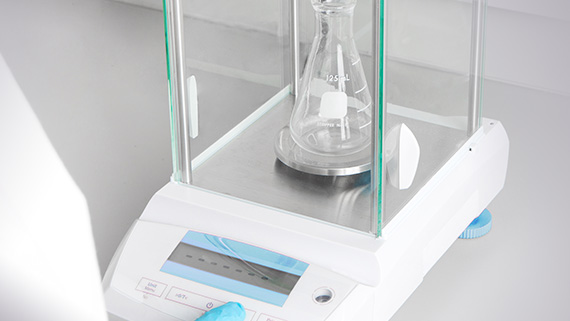
A Decommissioning-to-Recommissioning Workflow Built for GxP
Every regulated instrument is decommissioned with its as-found calibration status captured, crated to instrument-specific specifications, transported under documented custody, and recommissioned with a full qualification sequence — a single package that integrates directly into your change management system.
- As-found calibration status & GxP shutdown
- Crating specs & validated transport conditions
- Documented chain of custody
- IQ/OQ/PQ qualification at the new site
- NIST-traceable recalibration & updated certificates
- Change control documentation package
Review the full scope and service tiers on the laboratory asset relocation service page, or see our temperature & humidity mapping for the qualification studies your relocated storage and stability equipment will need.
Pharmaceutical & GMP Laboratory Relocation FAQs
Decommissioning is the formal process of documenting an instrument’s as-found calibration status, following GxP-compliant shutdown procedures, and initiating the chain of custody records before the instrument is disconnected, crated, or moved. It is required by GxP, FDA, CAP, and CLIA frameworks because a move is a change event — the regulatory record must show that the instrument was in a known state immediately before the move and that handling was controlled throughout. Without a formal decommissioning, you cannot demonstrate that any out-of-tolerance condition found at the new site occurred during transit rather than before the move.
Most regulated environments require a full IQ/OQ/PQ sequence after relocation. Installation Qualification (IQ) verifies the instrument is installed correctly in the new environment. Operational Qualification (OQ) confirms it operates within its specified range under the new site conditions. Performance Qualification (PQ) verifies fitness for its intended use. In addition to these qualification activities, NIST-traceable recalibration with updated site-specific certificates is required so that calibration records reflect the current location. The specific qualification protocols and acceptance criteria are determined by the instrument type, the regulatory framework, and your site’s quality procedures.
Yes. Calibration certificates reference the location where the calibration was performed. After an instrument moves to a new site, a new calibration certificate must be issued reflecting the new location, site address, and responsible contact. More importantly, the physical conditions at the new site — temperature, humidity, altitude, vibration, and utility quality — all affect calibration performance. Femto Scientific performs a full NIST-traceable calibration at the new location as part of the recommissioning process, ensuring the certificate is accurate for the actual operating environment of the instrument at its new address.
Chain of custody is a continuous, documented record of who handled each instrument, when, and in what condition, from the moment of decommissioning through delivery and recommissioning at the new site. Femto Scientific initiates the chain of custody during decommissioning — recording each instrument’s asset ID, serial number, and as-found condition — and maintains a formal handoff record at every transfer of responsibility, including the point at which instruments are released to your approved movers. On arrival, deliveries are verified against the inventory and condition records before any unpacking begins, so any discrepancy or transit damage is identified and documented immediately. This unbroken record is what allows a GxP, FDA, CAP, or CLIA auditor to trace an instrument’s handling across the entire move and confirm that no undocumented event could have affected its qualification status.
Sensitive laboratory instruments — analytical balances, HPLC and chromatography systems, microscopes, and temperature-critical equipment — each require crating and packaging specifications matched to their fragility, mass, and sensitivity to shock, vibration, and temperature. During decommissioning, Femto Scientific prepares instrument-specific packaging specifications and identifies condition-monitoring requirements, such as shock and vibration indicators or temperature data loggers placed with vibration-sensitive, temperature-sensitive, and cold-chain items. We follow manufacturer transport guidance for components that must be locked, removed, or immobilized before movement. Femto Scientific does not provide freight or physical moving services; instead, we specify the handling, orientation, environmental, and condition-monitoring requirements that your approved movers must follow, and we verify the delivered condition against those requirements before recommissioning begins.
Put Your GMP Instrument Move on a Defensible Qualification Program
Tell us your instrument count, types, and destination — we’ll return a scope with decommissioning, validated transport requirements, and an IQ/OQ/PQ recommissioning plan that keeps your change control clean.