
- ISO/IEC 17025:2017 Accredited Laboratory
- NIST Traceable Thermal Verification Reports
- 25+ Years of Laboratory Instrument Calibration Experience
- All Makes and Manufacturers Serviced
- Nationwide Onsite & Mail-In Service
- CAP, CLIA, cGMP, and GxP Compatible Documentation
- Thermal Cyclers, qPCR, RT-PCR & Thermomixers
- Multi-Tiered Service Levels for Every Compliance Requirement
Onsite Service or Mail-In to Our State-of-the-Art ISO/IEC 17025 Accredited Laboratory
Thermal Cycler & PCR Calibration by Regulatory Environment
Compliance-focused guides to PCR thermal verification — block temperature accuracy, well-to-well uniformity, ramp rate, and heated lid verification, measurement uncertainty, and NIST traceability — written for your regulatory framework, whether you run a pharmaceutical GMP operation or a CAP/CLIA molecular diagnostics laboratory.
Thermal Cycler & PCR Calibration for All Major Manufacturers
All thermal verifications performed using NIST-traceable reference thermometry. A partial list of manufacturers and models we service:
- Applied Biosystems — Veriti® 96-Well, ProFlex™ PCR System, QuantStudio™ series (qPCR)
- Bio-Rad — C1000 Touch™, T100™, MyCycler™, CFX96™, CFX384™, CFX Connect™
- Eppendorf — Mastercycler® Pro, Mastercycler® Nexus, Nexus Gradient, Thermomixer® C, ThermoStat C
- Thermo Scientific — SimpliAmp™, SureCycler 8800, Hybaid PCR Express, ProFlex™
- QIAGEN — Rotor-Gene Q, RotorGene 6000, QIAcycler 96
- Roche — LightCycler® 96, LightCycler® 480, LightCycler® 2.0
- Analytik Jena — qTOWER³ series, BIOMETRA TAdvanced
- MJ Research — PTC-200™ Peltier Thermal Cycler, PTC-100™
- Benchmark Scientific — TC-96H Touch Screen, MultiGene OptiMax
- And many more — contact us if your brand or model is not listed
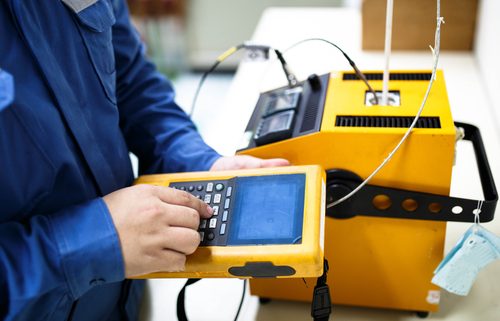
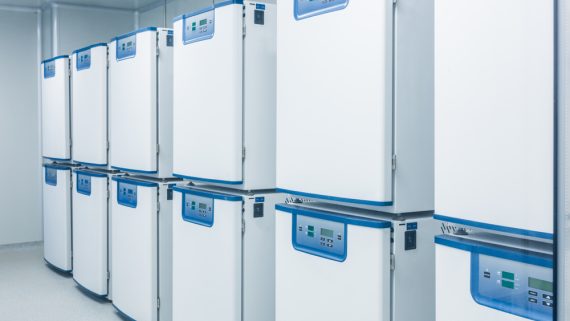
What Is Included in Every Thermal Cycler Calibration & Thermal Verification
- Block temperature accuracy verification at multiple set points using NIST-traceable reference thermometry
- Temperature uniformity testing (well-to-well variation, ΔTmax) across the block
- Ramp rate verification (°C/sec) — heating and cooling ramp performance
- Heated lid temperature verification against set-point specification
- Calibration sticker with unique barcode for laboratory asset tracking
- Gradient accuracy verification (gradient-capable models)
- Cycle timer accuracy verification
- As-found performance data (prior to any adjustment)
- As-left performance data (final condition returned to service)
- NIST-traceable thermal verification certificate with measurement uncertainty statement
- Happiness Guarantee on every service
Block temperature accuracy and uniformity verification — the standard choice for non-regulated research settings that need documented instrument performance.
| Service Includes | Level 1 | Level 2 | Level 3 | Level 4 |
|---|---|---|---|---|
| Block Temperature Accuracy Verification | ✔ | ✔ | ✔ | ✔ |
| Temperature Uniformity (Well-to-Well ΔT) | ✔ | ✔ | ✔ | ✔ |
| Calibration Sticker with Barcode | ✔ | ✔ | ✔ | ✔ |
| Ramp Rate Verification (°C/sec) | – | ✔ | ✔ | ✔ |
| Heated Lid Temperature Verification | – | ✔ | ✔ | ✔ |
| Calibration Certificate with As-Left Data | – | ✔ | ✔ | ✔ |
| As-Found and As-Left Data | – | – | ✔ | ✔ |
| Gradient Accuracy Verification | – | – | ✔ | ✔ |
| Cycle Timer Accuracy Verification | – | – | ✔ | ✔ |
| Documented Measurement Uncertainty | – | – | ✔ | ✔ |
| ISO/IEC 17025 Accredited Certificate | – | – | ✔ | ✔ |
| IQ/OQ/PQ Documentation Package | – | – | – | ✔ |
| Options | ||||
|
Express Turnaround
24 hr / 48 hr / 72 hr
|
✔ | ✔ | ✔ | ✔ |
| Onsite Service at Your Facility | ✔ | ✔ | ✔ | ✔ |
| Adjustment if Out of Specification | ✔ | ✔ | ✔ | ✔ |
| Preventative Maintenance (PM) | ✔ | ✔ | ✔ | ✔ |
| Customized Calibration Intervals | ✔ | ✔ | ✔ | ✔ |
| Thermal Cycler Repair Services | ✔ | ✔ | ✔ | ✔ |
Level 3 and Level 4 thermal verification certificates satisfy CAP, CLIA, cGMP, GLP, and GxP documentation requirements for PCR instruments used in regulated laboratory and pharmaceutical environments. Level 4 IQ/OQ/PQ packages support instrument qualification for FDA 21 CFR Part 11 environments.
PCR & Thermal Cycler Calibration for Regulated Laboratories
Femto Scientific’s ISO/IEC 17025 accredited thermal verification certificates and documentation packages meet the requirements of FDA, CAP, CLIA, and cGMP programs for PCR and molecular biology instruments.
GMP & GxP — 21 CFR Part 11 & Instrument Qualification
FDA-regulated laboratories performing PCR-based assays require documented instrument qualification (IQ/OQ/PQ) with NIST-traceable thermal performance data. Our Level 4 service provides complete qualification documentation packages with as-found and as-left data, measurement uncertainty statements, and full NIST traceability — supporting FDA 21 CFR Part 11 compliance and GMP change control programs.
CAP & CLIA — Assay Reproducibility & QC Requirements
CAP and CLIA require documented calibration of PCR instruments and molecular diagnostic equipment used in clinical testing. Block temperature accuracy and uniformity directly affect cycle threshold (Ct) reproducibility and assay sensitivity. Our ISO 17025 accredited certificates include the as-found and as-left thermal performance data required by CAP laboratory accreditation program (LAP) and CLIA quality system regulations for molecular testing laboratories.
ISO/IEC 17025 — NIST Traceable Thermal Verification
ISO/IEC 17025 accreditation means our thermal verification measurements are performed with independently validated reference standards and methods. Our calibration certificates include documented expanded measurement uncertainty (k=2, approximately 95% confidence level), unbroken NIST traceability, and environmental condition records — satisfying the most rigorous laboratory accreditation and regulatory requirements for PCR instrument performance documentation.
Thermal Cycler Calibration Frequency Guidelines by Laboratory Type
Calibration frequency for thermal cyclers should be established based on regulatory requirements, instrument criticality, assay type, and usage intensity. The following guidelines reflect common industry practice — Femto Scientific can help you establish and document an appropriate thermal verification interval for your specific compliance program and SOP requirements.
Thermal cyclers used in GMP manufacturing, QC testing, and method validation are typically verified every 6 months, or after any repair, significant environmental change, or failed IQ/OQ performance test. Calibration frequency must be justified in instrument qualification documentation and is subject to FDA inspection review. PCR instruments used in batch release testing may require more frequent verification.
Clinical and molecular diagnostic laboratories operating under CAP or CLIA are required to calibrate PCR and thermal cycling instruments annually at minimum, with frequency determined by the laboratory’s quality system and CAP inspection requirements. Any instrument returned from repair or experiencing performance anomalies (unexpected Ct shifts, failed no-template controls) should be verified before returning to diagnostic use.
Research and academic laboratories typically verify thermal cycler performance annually. Laboratories publishing quantitative PCR data, performing assay validation, or operating under institutional biosafety or GLP guidelines should consider semi-annual verification to maintain data integrity and assay reproducibility throughout research cycles. Core facilities servicing multiple research groups benefit from proactive calibration schedules.
Pharmaceutical manufacturing and contract research organizations (CROs) performing GMP-grade PCR analysis typically verify thermal cyclers quarterly or per SOP requirements. High-use instruments running continuous diagnostic or manufacturing assays are subject to accelerated performance drift and benefit from more frequent thermal verification to prevent unreported Ct deviations and OOS (out-of-specification) results.
Frequently Asked Questions About Thermal Cycler & PCR Calibration
Thermal cycler calibration — also called PCR thermal verification — is the process of measuring and documenting a thermal cycler’s actual block temperature performance against its programmed set points using NIST-traceable reference thermometry. A complete thermal verification evaluates block temperature accuracy (how closely the actual temperature matches the set point), temperature uniformity (well-to-well variation, expressed as ΔTmax), ramp rate (how quickly the block heats and cools), and heated lid temperature. If the instrument is found outside specification, it is adjusted before the final as-left data is recorded. The resulting thermal verification certificate provides a calibrated record of PCR instrument performance with NIST traceability for regulatory and quality system compliance.
PCR thermal verification is the measurement of a PCR thermal cycler’s temperature performance using calibrated reference sensors placed in or across the sample block. The verification documents whether the block reaches the correct temperatures during denaturation, annealing, and extension steps; whether temperature is uniform across all wells; and whether the instrument meets manufacturer specifications and regulatory requirements for use in clinical, pharmaceutical, or GMP applications. Thermal verification is the primary method for instrument qualification (OQ — Operational Qualification) of PCR instruments under 21 CFR Part 11, CAP LAP, and ISO 17025 quality frameworks.
PCR amplification efficiency is critically sensitive to temperature accuracy. Even a 1 °C deviation in annealing temperature can significantly change amplification specificity and yield. In quantitative PCR (qPCR), temperature inaccuracy directly affects cycle threshold (Ct) values — a 1–2 °C block error can produce Ct shifts of 1–3 cycles, leading to erroneous quantification results. Well-to-well temperature non-uniformity causes inconsistent amplification across the block, producing variable Ct values between replicate reactions. Regular ISO 17025 accredited thermal verification identifies performance drift before it affects assay results, ensuring reproducibility and regulatory compliance.
Block temperature uniformity, expressed as ΔTmax, is the maximum temperature difference measured between any two wells in the thermal cycler block at a given set point. High uniformity (ΔTmax close to 0 °C) means all reactions in the block experience the same temperature and produce consistent results. Poor uniformity means reactions in different wells are running at different temperatures, which leads to variation in amplification efficiency, inconsistent Ct values between replicates, and unreliable quantitative results. Most manufacturers specify ΔTmax of ±0.5 °C or less at set point. Femto Scientific measures uniformity across a representative grid of wells to produce a spatial temperature map of block performance.
Ramp rate verification measures how quickly a thermal cycler’s sample block heats and cools between temperature steps, expressed in °C/sec. Ramp rates directly affect cycle time, PCR specificity, and amplification efficiency. A thermal cycler with degraded heating or cooling performance will take longer to complete cycles and may not reach set-point temperatures within the expected hold time, particularly at low annealing temperatures. For fast PCR protocols and high-throughput applications, ramp rate performance is especially critical. Femto Scientific’s thermal verification measures actual heating and cooling ramp rates and compares them to manufacturer specifications and your application requirements.
Thermal Cycler & PCR Calibration Service Areas — Onsite & Nationwide Mail-In
Femto Scientific provides onsite thermal cycler, qPCR, and RT-PCR calibration in major laboratory markets across the United States. Laboratories outside our onsite territory can take advantage of our secure, fast-turnaround mail-in thermal cycler calibration service with NIST-traceable ISO 17025 accredited certificates delivered electronically.
- New York City, New York (NY) – Manhattan
- Somerset, New Jersey (NJ)
- Boston, Massachusetts (MA)
- Cambridge, Massachusetts (MA)
- Philadelphia, Pennsylvania (PA)
- Baltimore, Maryland (MD)
- Bethesda, Maryland (MD)
- New Haven, Connecticut (CT)
- Hartford, Connecticut (CT)
- Providence, Rhode Island (RI)
- Newark, Delaware (DE)
- Manchester, New Hampshire (NH)
- Rochester, New York (NY)
- Richmond, Virginia (VA)
- Durham, North Carolina (NC)
- Charlotte, North Carolina (NC)
- San Diego, California (CA)
- San Francisco, California (CA)
- Los Angeles, California (CA)
- Denver, Colorado (CO)
- Houston, Texas (TX)
- Phoenix, Arizona (AZ)
- St. Louis, Missouri (MO)
- Cincinnati, Ohio (OH)
- Cleveland, Ohio (OH)
- Indianapolis, Indiana (IN)
Mail-in thermal cycler calibration service is available to any laboratory in the United States. Contact us for shipping instructions, packaging guidance, and a service quote.