
- ISO/IEC 17025:2017 Accredited Laboratory
- NIST Traceable Calibration Certificates
- ASTM E617 & OIML R 111 Compliant
- All Weight Classes & Manufacturers Serviced
- Nationwide Onsite & Mail-In Service
- GMP, FDA, USP <41> & cGxP Compatible Documentation
- ASTM Class 0–7 & OIML E1–M3 Weight Sets
- Documented Measurement Uncertainty on Every Certificate
ASTM and OIML Certified Weight Calibration for Pharmaceutical, Industrial, and Research Laboratories
Mass & Weight Set Calibration by Regulatory Environment
Compliance-focused guides to ASTM E617 and OIML R 111 weight classes, the mass comparator calibration process, measurement uncertainty, buoyancy correction, and NIST traceability — written for your regulatory framework, whether you run a pharmaceutical GMP operation or a CAP/CLIA clinical laboratory.
ASTM and OIML Calibration Weight Classes We Service
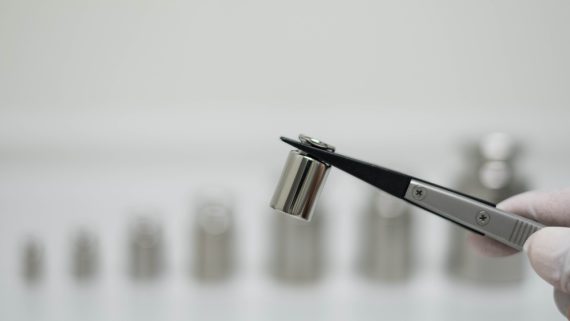
Femto Scientific calibrates individual weights and complete weight sets per ASTM E617 and OIML R 111 using NIST-traceable reference standards. A full list of weight classes serviced:
- ASTM Class 0 — Ultra-precision reference standards; primary laboratory reference weights; tightest tolerance for NIST-traceable mass laboratories
- ASTM Class 1 — High-precision working standards for analytical balance calibration; pharmaceutical QC and research laboratories
- ASTM Class 2 — Analytical and precision balance calibration; appropriate for most regulated laboratory calibration programs
- ASTM Class 3 — Precision laboratory use; calibrating balances with readabilities down to 0.01 mg
- ASTM Class 4 — Balances with readabilities of 0.1 mg and greater; general laboratory calibration
- ASTM Class 5, 6 & 7 — Field standards; commercial and industrial weighing; platform and floor scale calibration
- OIML E1 — Highest-precision mass standards; national laboratory reference and primary calibration use
- OIML E2 — Reference standards used to calibrate OIML F1 weights and analytical balances; used by Femto Scientific as laboratory working standards
- OIML F1 — Working standards for high-precision analytical balance calibration and accredited calibration laboratories
- OIML F2 — Precision laboratory weights; appropriate for most accredited calibration programs and instrument qualification
- OIML M1 — Commercial and industrial weighing; precision balances and platform scale calibration
- OIML M2 & M3 — Industrial and commercial trade applications; floor scales and industrial weighing systems
We calibrate weight sets from Troemner, Rice Lake, Ohaus, Mettler Toledo, Sartorius, Kern, Acculab, and all other major manufacturers. Contact us if your brand or class is not listed.
What Is Included in Every Mass Weight Set Calibration
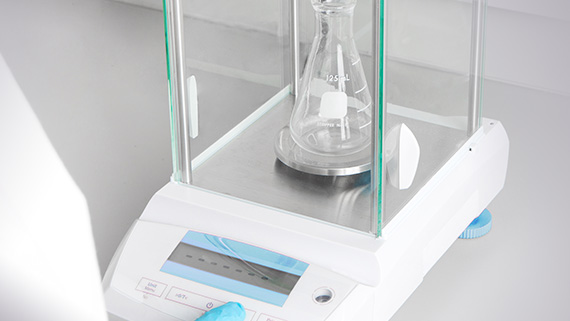
- Gravimetric comparison using NIST-traceable mass standards and precision mass comparator per ASTM E617 and OIML R 111
- Air buoyancy correction applied to all measurements to account for local air density conditions
- Measurement uncertainty calculated and documented per ISO/IEC 17025 requirements (expanded uncertainty, k=2, 95% confidence)
- As-found measurement data documenting weight condition before any cleaning or adjustment
- As-left measurement data confirming final calibrated value and tolerance compliance
- Calibration certificate with unique identifier, NIST traceability statement, and reference standard citations
- Environmental conditions (temperature, humidity, barometric pressure, air density) recorded during calibration
- Happiness Guarantee on every service
For a detailed explanation of the mass calibration process, including buoyancy correction methodology, traceability chain documentation, and measurement uncertainty budgets, see our comprehensive mass calibration guide.
Calibration sticker and basic performance verification — the standard choice for internal quality programs that do not require a regulatory compliance certificate.
| Service Includes | Level 1 | Level 2 | Level 3 | Level 4 |
|---|---|---|---|---|
| Gravimetric Comparison per ASTM E617 / OIML R 111 | ✔ | ✔ | ✔ | ✔ |
| Air Buoyancy Correction | ✔ | ✔ | ✔ | ✔ |
| NIST Traceable Reference Standards | ✔ | ✔ | ✔ | ✔ |
| Calibration Sticker with Unique ID | ✔ | ✔ | ✔ | ✔ |
| Calibration Certificate with As-Left Data | – | ✔ | ✔ | ✔ |
| As-Found and As-Left Calibration Data | – | – | ✔ | ✔ |
| Documented Measurement Uncertainty (k=2) | – | – | ✔ | ✔ |
| ISO/IEC 17025 Accredited Certificate | – | – | ✔ | ✔ |
| Options | ||||
|
Express Turnaround
24 hr / 48 hr / 72 hr
|
✔ | ✔ | ✔ | ✔ |
| Onsite Service at Your Facility | ✔ | ✔ | ✔ | ✔ |
| Individual Weight or Complete Set | ✔ | ✔ | ✔ | ✔ |
| Customized Recertification Intervals | ✔ | ✔ | ✔ | ✔ |
Level 3 and Level 4 calibration certificates satisfy GMP, GLP, FDA 21 CFR, CAP, CLIA, and cGxP documentation requirements for mass standards and calibration weight sets used in regulated laboratory and pharmaceutical manufacturing environments. All levels include NIST-traceable reference standards. Learn more about ASTM and OIML weight classes →
Mass Weight Set Calibration for Regulated and GMP Laboratories
Femto Scientific’s ISO/IEC 17025 accredited certificates for ASTM and OIML calibration weight sets meet the documentation requirements of the most demanding regulatory frameworks for laboratory mass standards.
GMP & GxP — 21 CFR Parts 58, 210, 211
cGMP and GLP programs require calibration weight sets to maintain current, NIST-traceable certificates with documented measurement uncertainty. Femto Scientific’s ISO/IEC 17025 accredited certificates for ASTM and OIML weight sets satisfy FDA 21 CFR requirements and support inspection readiness for all mass standards used in pharmaceutical manufacturing, QC testing, and analytical method validation. Our certificates include as-found and as-left data required for GMP change control documentation.
USP <41> & USP <1251> — Weighing Compliance
USP Chapter <41> Balances requires the use of certified calibration weights traceable to national or international standards for balance performance verification. USP Chapter <1251> Weighing on an Analytical Balance extends weighing system requirements to include verified reference weights. Femto Scientific certifies ASTM and OIML class weight sets to meet USP compendial accuracy requirements and provides documentation suitable for pharmaceutical compendial compliance programs. For a detailed explanation of USP weighing requirements, see our mass calibration guide.
CAP & CLIA Clinical Laboratory Compliance
CAP and CLIA require documented, NIST-traceable calibration of all measurement equipment used in diagnostic testing, including calibration weight sets used to verify balance performance. Our accredited weight calibration certificates with as-found and as-left data satisfy CAP inspection checklists and CLIA quality system regulations — delivered electronically to your QMS or LIMS for immediate compliance integration.
Weight Set Recertification Frequency Guidelines by Use Class
Recertification frequency should be established based on weight class, regulatory requirements, intended use, and use intensity. The following guidelines reflect common industry practice — Femto Scientific can help you establish and document appropriate recertification intervals for your specific compliance program and calibration hierarchy.
Primary and secondary reference standards used as working laboratory references for calibrating analytical balances and instrument qualification are typically recertified every 1–3 years. High-use reference weights in accredited calibration programs require more frequent recertification. Intervals must be documented and justified in the calibration program.
Working standards used for daily internal balance checks, instrument qualification, and GMP calibration programs are typically recertified annually. GMP regulations require working standard certificates to remain current, with the calibration interval documented in the equipment qualification file. Semi-annual recertification is recommended for high-use or GMP-critical weight sets.
Weights used for field calibration of balances, scales, and commercial weighing instruments are typically recertified every 6–12 months depending on use frequency, transport exposure, and applicable regulatory requirements. Field standards used in GMP environments require annual recertification at minimum, with shorter intervals for high-use instruments.
Industrial, commercial, and counting weights are recertified according to applicable regulatory requirements, internal quality programs, and use frequency. These typically require annual recertification or recertification when physical damage, excessive wear, or failed performance checks are observed. Contact us to establish a documented interval for your specific application.
Frequently Asked Questions About Mass & Weight Set Calibration
Mass weight set calibration is the process of comparing a certified reference weight or weight set against NIST-traceable mass standards to determine whether the weights meet the accuracy tolerances of their designated ASTM or OIML class. Using a precision mass comparator with air buoyancy corrections, the calibration produces a certificate documenting the as-found mass value, expanded measurement uncertainty, and full NIST traceability. Required by GMP, USP Chapters <41> and <1251>, and ISO/IEC 17025 compliance programs.
Femto Scientific calibrates ASTM E617 Classes 0 through 7 and OIML R 111 Classes E1, E2, F1, F2, M1, M2, and M3. We calibrate individual weights and complete weight sets from all major manufacturers including Troemner, Rice Lake, Ohaus, Mettler Toledo, Sartorius, Kern, and Acculab. Contact us to confirm availability for your specific weight class and denomination combination.
NIST traceable weight calibration documents an unbroken chain of calibration comparisons from the calibrated weight back to the National Institute of Standards and Technology national mass standards. Femto Scientific’s mass reference standards are calibrated against NIST-certified reference masses on a documented recertification schedule. This traceability chain is required by FDA, CAP, CLIA, and ISO programs as evidence that the calibrated weights are metrologically valid for balance calibration and instrument qualification.
Reference standards (ASTM Class 0–1, OIML E1–E2): every 1–3 years. Working standards (ASTM Class 2–3, OIML F1–F2): annually. Field standards (ASTM Class 4–6, OIML M1–M2): every 6–12 months. Industrial weights: per quality system requirements. GMP programs require calibration intervals to be documented and justified in the equipment qualification file. Intervals should be shortened if as-found data shows consistent near-tolerance findings.
Femto Scientific’s accredited certificate includes: nominal value and unique ID of each weight; as-found and as-left conventional mass values; expanded measurement uncertainty (k=2, 95% confidence); NIST traceability statement; environmental conditions during calibration; date of calibration; tolerance pass/fail evaluation; and the ISO/IEC 17025 accreditation identifier. This satisfies FDA 21 CFR, CAP, CLIA, and GMP documentation requirements.
Mass Weight Set Calibration Service Areas — Onsite & Nationwide Mail-In
Femto Scientific provides onsite mass weight set calibration and recertification in major laboratory markets across the United States. Laboratories outside our onsite territory can take advantage of our secure, fast-turnaround mail-in weight calibration service with NIST traceable ISO 17025 accredited certificates delivered electronically.
- New York City, New York (NY) – Manhattan
- Somerset, New Jersey (NJ)
- Boston, Massachusetts (MA)
- Cambridge, Massachusetts (MA)
- Philadelphia, Pennsylvania (PA)
- Baltimore, Maryland (MD)
- Bethesda, Maryland (MD)
- New Haven, Connecticut (CT)
- Hartford, Connecticut (CT)
- Providence, Rhode Island (RI)
- Newark, Delaware (DE)
- Manchester, New Hampshire (NH)
- Rochester, New York (NY)
- Richmond, Virginia (VA)
- Durham, North Carolina (NC)
- Charlotte, North Carolina (NC)
- San Diego, California (CA)
- San Francisco, California (CA)
- Los Angeles, California (CA)
- Denver, Colorado (CO)
- Houston, Texas (TX)
- Phoenix, Arizona (AZ)
- St. Louis, Missouri (MO)
- Cincinnati, Ohio (OH)
- Cleveland, Ohio (OH)
- Indianapolis, Indiana (IN)
Mail-in mass weight set calibration is available to any laboratory in the United States. Contact us for shipping instructions, packaging guidance, and a service quote.