
- ISO/IEC 17025:2017 Accredited Laboratory
- NIST Traceable Humidity & Temperature Calibration
- 25+ Years of Laboratory Instrument Service
- All Makes and Manufacturers Serviced
- CAP, CLIA, cGMP, and GxP Compatible Documentation
- Humidity Probes, Sensors, Transmitters & Data Loggers
- Environmental Monitoring & Controlled Storage Applications
- Nationwide Onsite & Mail-In / Depot Service
Onsite Service at Your Facility or Depot Calibration at Our ISO/IEC 17025 Accredited Laboratory
Humidity & Temperature Calibration by Regulatory Environment
Compliance-focused guides to multi-point humidity and temperature calibration, measurement uncertainty, NIST-traceable RH reference standards, and the FDA 21 CFR Part 211, USP <1079>, and ICH Q1A requirements — written for your regulatory framework, whether you run a pharmaceutical GMP operation or a CAP/CLIA clinical laboratory.
Humidity & Temperature Calibration for All Major Manufacturers
ISO 17025 accredited calibration services for humidity probes, RH sensors, transmitters, data loggers, psychrometers, and combination humidity/temperature instruments. A partial list of manufacturers and models we service:
- Vaisala — HM70, HM40, HMT310, HMT330, HMT360, HUMICAP® sensors, HM series handheld probes
- Rotronic — HygroPalm HP22, HP23, HP32, HC2-S, HC2-W, HygroFlex5/6 series transmitters
- Testo — 625, 635, 645, 6681, 6684, Saveris™ 2 data loggers, 174H, 175 H series
- Dickson — TM575, TM575K, KT6, KT6P, SP425, TX 2000 series, DicksonWare loggers
- REES Scientific — HMS series, EnviroScan probes and transmitters
- Onset HOBO — MX2301, UX100, U12, U23, RX3000 data loggers and temperature/RH sensors
- E Instruments — TA420, Air Quality monitors with RH sensing
- Thermo Scientific — EMS (Environmental Monitoring System) sensors and transmitters
- Omega Engineering — RH-USB, OM-CP-RHTEMP, RHCL series humidity loggers
- And many more — contact us if your brand or model is not listed
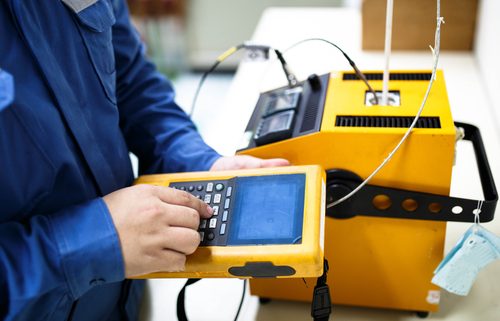
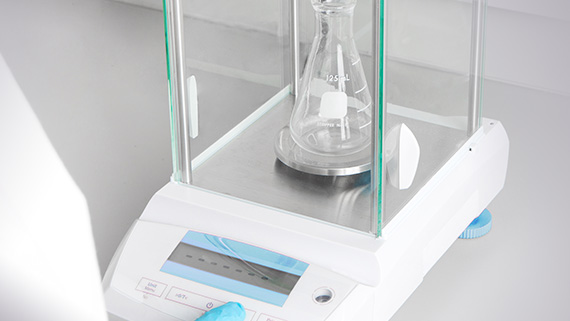
What Is Included in Every Humidity & Temperature Calibration
- Multi-point relative humidity calibration (11 % RH, 33 % RH, 75 % RH standard; additional points available)
- As-found measurement data recorded at each calibration point
- Temperature co-verification at all calibration points
- Accuracy verification against NIST-traceable reference standards
- Sensor hysteresis assessment at Level 3 and above
- Probe condition assessment and replacement recommendation
- Instrument function and display verification
- Calibration sticker with unique barcode for asset tracking
- NIST-traceable calibration certificate with as-found and as-left data
- Documented measurement uncertainty statement (Level 3 and Level 4)
- ISO/IEC 17025 accredited certificate (Level 3 and Level 4)
- Calibration data suitable for GMP, CAP, CLIA, and environmental monitoring SOPs
Standard 3-point humidity calibration (11 % RH, 33 % RH, 75 % RH) with NIST-traceable reference standards and a calibration certificate — the baseline service for research and general environmental monitoring use.
| Service Includes | Level 1 | Level 2 | Level 3 | Level 4 |
|---|---|---|---|---|
| 3-Point Humidity Calibration (11, 33, 75 % RH) | ✔ | ✔ | ✔ | ✔ |
| NIST Traceable Reference Standards | ✔ | ✔ | ✔ | ✔ |
| Temperature Co-Verification at Calibration Points | ✔ | ✔ | ✔ | ✔ |
| Calibration Certificate (As-Found & As-Left) | ✔ | ✔ | ✔ | ✔ |
| 5-Point Extended Calibration (0, 11, 33, 75, 95 % RH) | – | ✔ | ✔ | ✔ |
| Sensor Hysteresis Assessment | – | ✔ | ✔ | ✔ |
| Probe Condition Assessment | – | ✔ | ✔ | ✔ |
| Documented Measurement Uncertainty (GUM) | – | – | ✔ | ✔ |
| ISO/IEC 17025 Accredited Certificate | – | – | ✔ | ✔ |
| GMP/GxP Qualification Documentation Package | – | – | – | ✔ |
| Options | ||||
| Onsite Service at Your Facility | ✔ | ✔ | ✔ | ✔ |
| Data Logger Download & Review | ✔ | ✔ | ✔ | ✔ |
| Probe / Sensor Replacement | ✔ | ✔ | ✔ | ✔ |
| Annual Service Contract | ✔ | ✔ | ✔ | ✔ |
Level 3 and Level 4 service packages satisfy GMP, FDA 21 CFR Part 211, CAP, and CLIA documentation requirements for humidity and temperature instruments used in pharmaceutical manufacturing, controlled storage monitoring, clinical testing, and regulated environmental monitoring programs.
Humidity Calibration Compliance for Regulated Laboratories
Femto Scientific’s humidity and temperature calibration documentation meets the instrument qualification requirements of FDA, GMP, CAP, and CLIA programs — from initial calibration through ongoing periodic recertification of environmental monitoring systems.
GMP & FDA — Pharmaceutical Controlled Storage
FDA regulations under 21 CFR Parts 211.68 and 211.182 require that instruments used to monitor controlled storage conditions — including temperature and humidity sensors in cold rooms, stability chambers, and cleanrooms — be calibrated and qualified with documented, traceable standards. USP <1079> and ICH Q1A guidance documents specify that humidity monitoring equipment must be calibrated at appropriate intervals. Femto Scientific’s Level 4 service delivers GMP-compliant documentation with NIST-traceable reference standards, full as-found and as-left data, expanded measurement uncertainty, and audit-ready qualification packages designed for FDA inspection readiness.
CAP & CLIA — Clinical Laboratory Environments
Clinical laboratories operating under CAP accreditation or CLIA regulations must document the calibration of environmental monitoring instruments used to control and verify storage conditions for reagents, controls, specimens, and blood products. CAP checklists and CLIA conditions of participation require documented NIST-traceable calibration records for humidity and temperature monitoring instruments, with calibration intervals appropriate for the critical nature of the monitored environment. Femto Scientific’s calibration certificates include all elements required for CAP survey documentation and CLIA compliance review, formatted for direct integration into laboratory QMS systems.
ISO/IEC 17025 — Accredited Humidity Calibration
ISO/IEC 17025 accreditation means our humidity and temperature calibration services are performed using independently validated methods and NIST-traceable reference standards, with documented expanded measurement uncertainty. Our Level 3 and Level 4 certificates include the uncertainty statement (U at k=2, approximately 95% confidence level) required for rigorous metrological programs and environmental monitoring validation protocols. This level of documentation satisfies demanding laboratory accreditation requirements for humidity and temperature measurement programs in pharmaceutical, clinical, environmental, and industrial applications.
Humidity Calibration Frequency Guidelines by Laboratory Type
Humidity sensor calibration frequency should be established based on regulatory requirements, the criticality of the monitored environment, sensor age and history, and the environmental conditions to which sensors are exposed. The following guidelines reflect industry best practice — Femto Scientific can help you establish and document an appropriate calibration schedule for your quality program.
Humidity and temperature sensors used in controlled storage areas (cold rooms, stability chambers, cleanrooms, freezers) under cGMP should be calibrated every 6–12 months, with calibration intervals defined in each sensor’s qualification plan. ICH Q1A guidance for stability studies requires that storage chambers be monitored with calibrated instruments. Any sensor involved in monitoring storage conditions for API, finished product, or in-process materials should follow the calibration schedule in the laboratory’s environmental monitoring SOP, with requalification after any sensor replacement, repair, or documented excursion event.
Clinical laboratories monitoring storage conditions for reagents, controls, blood products, and biological specimens under CAP or CLIA should calibrate humidity and temperature sensors annually at minimum. For refrigerators, freezers, or incubators storing critical clinical materials, semi-annual calibration or per-sensor qualification plan frequency is recommended. Any sensor should be recalibrated after physical relocation, after any repair, or when trending data shows performance drift outside established acceptance criteria in the laboratory’s environmental monitoring program.
Environmental monitoring systems (EMS) in GMP facilities — including continuous monitoring networks covering multiple controlled rooms — should be calibrated on a risk-based schedule with semi-annual calibration for critical monitoring points (Grade A/B areas, defined storage rooms) and annual calibration for less critical monitoring points. Validation protocols (IQ/OQ/PQ) for EMS systems require initial calibration of all sensors before system qualification, with ongoing periodic recalibration documented as part of the validated system’s change control and periodic review program.
Research laboratories and general-purpose facilities should calibrate humidity and temperature sensors annually, with more frequent calibration for sensors in high-cycling environments (constant switching between wet and dry conditions) or sensors exposed to chemical contaminants that can degrade the sensing element. Any humidity sensor used in experiments requiring traceable measurement data for publication, grant reporting, or regulatory submissions should be calibrated at the ISO 17025 accredited level to ensure data defensibility under peer review and audit.
Frequently Asked Questions About Humidity & Temperature Calibration
Humidity calibration is the process of verifying and adjusting a humidity sensor or probe’s accuracy by comparing its output to NIST-traceable reference standards at two or more known relative humidity values, and documenting the results with calibration certificates. Calibration establishes the as-found error at each calibration point, determines whether the sensor is within its manufacturer-specified accuracy limits, and documents the as-left performance after any corrections are applied. For regulated laboratories, a calibration certificate with NIST-traceable reference documentation provides the legal evidence of humidity measurement accuracy required by GMP, FDA, CAP, CLIA, and ISO programs for controlled storage monitoring, stability testing, and environmental monitoring applications.
Humidity probe and sensor calibration frequency depends on the laboratory type, regulatory requirements, and criticality of the monitored environment. Pharmaceutical facilities under cGMP typically calibrate humidity sensors every 6–12 months, with calibration intervals defined in the sensor’s qualification plan and environmental monitoring SOP. Clinical laboratories under CAP or CLIA typically calibrate annually at minimum, with more frequent calibration for sensors monitoring critical storage areas. Research and general laboratory sensors should be calibrated annually. All humidity sensors should be recalibrated after physical relocation, after any repair or sensor replacement, or when trending data shows performance drift outside established acceptance criteria. Calibration intervals should be documented in the laboratory’s quality system.
Measurement uncertainty for humidity calibration is a quantitative statement of the doubt associated with a humidity measurement result, expressed as an expanded uncertainty (U) at a specified coverage factor (typically k=2, corresponding to approximately 95% confidence level). For humidity calibration, expanded uncertainty values typically range from ±0.5 % RH to ±2 % RH depending on the reference standard used, the calibration points, and the calibration method. ISO/IEC 17025 accredited calibration laboratories are required to evaluate and report measurement uncertainty on every accredited calibration certificate. A documented uncertainty statement is essential for determining whether a sensor’s as-found error is within specification with the required level of statistical confidence — and is increasingly required by FDA inspectors and CAP surveyors reviewing calibration records for controlled environment monitoring systems.
Yes. Femto Scientific provides onsite humidity and temperature sensor calibration across major U.S. laboratory markets including New York, New Jersey, Boston, Philadelphia, Baltimore, Connecticut, California, Texas, and many more. Onsite service is ideal for laboratories with large fleets of humidity probes and data loggers, for GMP facilities requiring witnessed calibration or complete environmental monitoring system calibration, and for fixed installation sensors in cleanrooms, cold rooms, and stability chambers that cannot be easily removed. For laboratories outside our direct service territory, we offer depot calibration at our ISO 17025 accredited laboratory in Somerset, NJ. Contact us to confirm scheduling availability in your location.
While ISO 17025 accreditation is not explicitly required by name in every regulatory framework, it is the recognized standard for demonstrating technical calibration competence for environmental monitoring instruments and is increasingly expected by FDA, CAP, and CLIA auditors. The key practical difference between ISO 17025 accredited humidity calibration and non-accredited calibration is the documented measurement uncertainty statement on the certificate. Without a measurement uncertainty statement, it is not possible to determine whether a sensor’s error is within its acceptance criteria with the required level of statistical confidence — a limitation that FDA inspectors and CAP surveyors are increasingly scrutinizing in environmental monitoring programs. Femto Scientific’s Level 3 and Level 4 calibration certificates include all elements required for ISO 17025 compliance, including documented expanded measurement uncertainty and full reference standard traceability documentation.
Humidity & Temperature Calibration Service Areas — Onsite & Nationwide Depot Service
Femto Scientific provides onsite humidity and temperature calibration services in major laboratory markets across the United States. Laboratories outside our onsite territory can use our secure depot calibration service with certificates and service reports delivered electronically.
- New York City, New York (NY) – Manhattan
- Somerset, New Jersey (NJ)
- Boston, Massachusetts (MA)
- Cambridge, Massachusetts (MA)
- Philadelphia, Pennsylvania (PA)
- Baltimore, Maryland (MD)
- Bethesda, Maryland (MD)
- New Haven, Connecticut (CT)
- Hartford, Connecticut (CT)
- Providence, Rhode Island (RI)
- Newark, Delaware (DE)
- Manchester, New Hampshire (NH)
- Rochester, New York (NY)
- Richmond, Virginia (VA)
- Durham, North Carolina (NC)
- Charlotte, North Carolina (NC)
- San Diego, California (CA)
- San Francisco, California (CA)
- Los Angeles, California (CA)
- Denver, Colorado (CO)
- Houston, Texas (TX)
- Phoenix, Arizona (AZ)
- St. Louis, Missouri (MO)
- Cincinnati, Ohio (OH)
- Cleveland, Ohio (OH)
- Indianapolis, Indiana (IN)
Depot humidity calibration is available to any laboratory in the United States. Contact us for shipping instructions and a calibration quote.