
- ISO/IEC 17025:2017 Accredited Laboratory
- NIST Traceable Calibration Certificates
- RTDs, Thermocouples, PRTs & Digital Sensors
- Pharmaceutical, Biotech & GMP Compatible
- Nationwide Onsite & Mail-In Service
- CAP, CLIA, cGMP, GxP & GLP Documentation
- Autoclaves, Incubators, Freezers & Environmental Chambers
- Multi-Tiered Service Levels
Onsite or Mail-In ISO/IEC 17025 Accredited Temperature Calibration for Every Sensor Technology and Regulated Environment
Temperature Calibration by Regulatory Environment
Compliance-focused guides to RTD and thermocouple calibration, temperature mapping, measurement uncertainty, ITS-90 and NIST traceability, and the ASTM E220 / E230 / E1137 and IEC 60584 standards — written for your regulatory framework, whether you run a pharmaceutical GMP operation or a CAP/CLIA clinical laboratory.
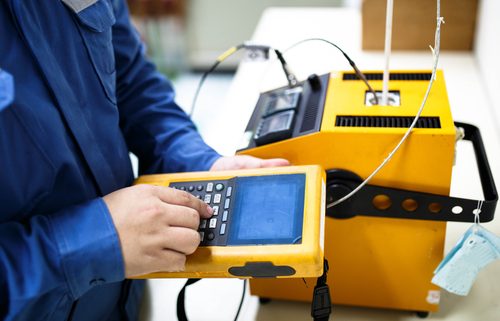
Temperature Instruments & Equipment We Calibrate
Femto Scientific calibrates all classes of temperature-measuring instruments and temperature-controlled laboratory equipment used in pharmaceutical, biotech, clinical, and research environments.
- RTDs (Pt100, Pt1000) — 2-wire, 3-wire, and 4-wire configurations; surface, immersion, and air probes
- Thermocouples — Type K, J, T, E, N, R, S, and B; bare wire, sheathed, and mineral-insulated
- PRTs & Precision RTDs — long-stem, capsule, and laboratory-grade reference PRTs
- Digital Thermometers & Probes — handheld, benchtop, and multi-channel readouts with all probe types
- Liquid-in-Glass Thermometers — total-immersion and partial-immersion per ASTM E77
- Infrared & Non-Contact Thermometers — handheld and fixed-mount IR sensors
- Data Loggers & Temperature Transmitters — standalone loggers, 4–20 mA transmitters, and wireless monitoring sensors
- Autoclaves & Steam Sterilizers — chamber temperature verification per USP <1229>
- Incubators & CO₂ Incubators — temperature uniformity and stability testing
- Refrigerators & Ultra-Low Freezers — from +4°C to −80°C; Helmer, Revco, Thermo Fisher
- Cryogenic Freezers — liquid nitrogen and vapor-phase systems
- Ovens & Vacuum Ovens — convection and forced-air ovens; Memmert, Binder, Thermo
- Water Baths & Dry Wells — circulating and immersion baths; field dry-block calibrators
- Stability Chambers — ICH-compliant walk-in and reach-in stability rooms and cabinets
Temperature Calibration for All Major Manufacturers
All sensor calibrations per ITS-90, ASTM E220, and ASTM E230 using NIST-traceable reference standards. Equipment calibrations using calibrated reference probes with documented uncertainty. A partial list of manufacturers we service:
- Thermo Fisher Scientific — Nalgene, Revco, Forma, and Lindberg/Blue M equipment; Barnstead water baths
- Fluke / Hart Scientific — Fluke 1523/1524, Hart 1502A/1529, and dry-block calibrators (model 9103, 9140, 9144)
- Omega Engineering — HH series thermometers, RTD probes, thermocouples, and OMEGAETTE data loggers
- Vaisala — HM70, HM80, and DM70 series; Indigo transmitters; HUMICAP sensors
- Digi-Sense / Cole-Parmer — all thermocouple and RTD data loggers and indicators
- Dickson — KT, TK, and TX series data loggers and chart recorders
- Hanna Instruments — HI98501 Checktemp and precision digital thermometers
- Extech Instruments — thermocouple thermometers, IR thermometers, and SDL series loggers
- Memmert & Binder — incubators, ovens, and stability chambers
- Helmer Scientific — lab-grade refrigerators, plasma freezers, and platelet incubators
- Mettler Toledo — temperature probes and sensors for analytical instruments
- And many more — contact us if your brand is not listed above
What Is Included in Every Temperature Calibration Service
- Multi-point temperature accuracy testing against NIST-traceable reference standards per ITS-90
- Repeatability testing at each calibration point
- Adjustment or correction if the sensor is found out of tolerance
- Environmental condition monitoring (ambient temperature, humidity) during calibration
- Calibration sticker with unique barcode for laboratory asset tracking
- Calibration certificate with as-left and/or as-found data (level-dependent)
- Documented measurement uncertainty (ISO/IEC 17025 service levels)
- Happiness Guarantee on every service
Calibration sticker and basic performance verification — the standard choice for internal quality programs that do not require a regulatory compliance certificate.
| Service Includes | Level 1 | Level 2 | Level 3 | Level 4 |
|---|---|---|---|---|
| Multi-Point Temperature Accuracy Test | ✔ | ✔ | ✔ | ✔ |
| Repeatability Test at Each Point | ✔ | ✔ | ✔ | ✔ |
| Adjustment if Out of Tolerance | ✔ | ✔ | ✔ | ✔ |
| Calibration Sticker with Barcode | ✔ | ✔ | ✔ | ✔ |
| Calibration Certificate with As-Left Data | – | ✔ | ✔ | ✔ |
| As-Found and As-Left Calibration Data | – | – | ✔ | ✔ |
| Documented Measurement Uncertainty | – | – | ✔ | ✔ |
| ISO/IEC 17025 Accredited Certificate | – | – | ✔ | ✔ |
| IQ/OQ Support Documentation | – | – | – | ✔ |
| Options | ||||
|
Express Turnaround
24 hr / 48 hr / 72 hr
|
✔ | ✔ | ✔ | ✔ |
| Onsite Service at Your Facility | ✔ | ✔ | ✔ | ✔ |
| Sensor Repair & Replacement | ✔ | ✔ | ✔ | ✔ |
| Preventative Maintenance | ✔ | ✔ | ✔ | ✔ |
| Customized Calibration Intervals | ✔ | ✔ | ✔ | ✔ |
Level 3 and Level 4 temperature calibration certificates satisfy CAP, CLIA, cGMP, GLP, GxP, and FDA 21 CFR Parts 58 and 211 documentation requirements for temperature-measuring instruments used in regulated laboratory and pharmaceutical manufacturing environments. Level 4 certificates include IQ/OQ support documentation for GMP equipment qualification.
Temperature Calibration for Regulated and GMP Laboratories
Femto Scientific’s ISO/IEC 17025 accredited certificates and documentation satisfy the temperature calibration requirements of the most demanding regulatory frameworks in pharmaceutical, clinical, and research laboratory settings.
GMP, GxP & FDA 21 CFR Parts 58 & 211
cGMP and GLP programs require temperature sensor calibration records with unbroken NIST traceability, documented measurement uncertainty, and as-found/as-left data for all instruments used in stability chambers, incubators, autoclaves, and process monitoring. Our ISO/IEC 17025 accredited certificates satisfy FDA inspection requirements and change control documentation for pharmaceutical manufacturing and testing environments.
CAP & CLIA Clinical Laboratory Compliance
CAP and CLIA require documented, NIST-traceable calibration of all temperature-measuring instruments used in diagnostic testing and specimen storage. Our accredited certificates with as-found and as-left data satisfy CAP inspection checklists for refrigerators, incubators, water baths, and dry baths — delivered electronically to your QMS or LIMS for immediate audit readiness.
ISO 17025, NIST, ITS-90 & USP <1079> / <1118>
All Femto Scientific temperature calibrations are performed per ITS-90 using NIST-traceable reference standards. Our certificates satisfy USP Chapter <1079> requirements for good storage and distribution practices (vaccine and drug storage monitoring), USP <1118> for monitoring devices, and ISO 17025 accreditation requirements for temperature measurement traceability in quality management systems.
Temperature Calibration Frequency Guidelines by Laboratory Type
Calibration frequency for temperature sensors should reflect regulatory requirements, instrument criticality, sensor technology, and environmental conditions. Sensors in harsh environments or used in critical processes may require more frequent calibration. Femto Scientific can help you establish and document an appropriate calibration interval for your compliance program.
Temperature sensors used in GMP manufacturing, stability chambers, and incubators are typically calibrated every 6 to 12 months, depending on criticality and instrument type. Sensors in autoclaves, lyophilizers, and controlled storage require validated calibration intervals documented in the instrument qualification and change control programs, subject to FDA inspection review.
Clinical laboratories operating under CAP or CLIA are typically required to calibrate temperature-measuring instruments annually at minimum, with frequency determined by the laboratory’s quality system, instrument criticality, and CAP inspection requirements. High-criticality sensors in blood banking, specimen storage, and culture equipment may require semi-annual calibration.
Research and academic laboratories typically calibrate temperature sensors annually. Laboratories generating data for publication, participating in GLP studies, or operating under institutional quality requirements should consider more frequent calibration for sensors used in critical experiments where temperature accuracy directly affects measurement outcomes.
Vaccine storage and cold-chain monitoring sensors must be calibrated per USP <1079> and CDC/VFC program requirements. Temperature data loggers and continuous monitoring sensors in vaccine storage refrigerators and freezers should be calibrated at least annually and after any significant maintenance event or out-of-range alarm condition.
Frequently Asked Questions About Temperature Calibration
Femto Scientific calibrates RTDs (Pt100, Pt1000, 2-wire, 3-wire, 4-wire), thermocouples (Type K, J, T, E, N, R, S, B), PRTs, digital thermometers, liquid-in-glass thermometers, infrared thermometers, data loggers, and temperature transmitters. We also calibrate the temperature systems of autoclaves, incubators, CO₂ incubators, refrigerators, ultra-low freezers (−80°C), cryogenic freezers, ovens, water baths, dry wells, and stability chambers. Contact us if your instrument type is not listed.
Femto Scientific performs temperature calibrations per ITS-90, ASTM E220 (thermocouple comparison calibration), ASTM E230 (thermocouple EMF tables), ASTM E1137 (industrial PRTs), IEC 60584 (thermocouples), and ASTM E77 (liquid-in-glass thermometers). All calibration results are traceable to NIST national measurement standards via an unbroken chain of comparisons documented on every certificate.
Pharmaceutical and GMP laboratories calibrate critical temperature sensors every 6 to 12 months. Clinical laboratories under CAP or CLIA are typically required to calibrate temperature instruments at least annually. Research laboratories typically calibrate annually. Cold-chain and vaccine storage sensors should be calibrated per USP <1079> requirements and after any out-of-range alarm event or maintenance activity. Femto Scientific can help you establish and document an interval appropriate for your specific compliance program.
Yes. All Femto Scientific temperature calibration certificates document an unbroken chain of traceability from your instrument to our NIST-traceable reference standards. ISO/IEC 17025 accredited certificates additionally include documented expanded measurement uncertainty at the 95% confidence level, which differentiates accredited calibration from simple verification for regulatory compliance purposes. This traceability chain satisfies FDA, CAP, CLIA, ISO, and GMP audit requirements.
Yes. Femto Scientific provides onsite temperature calibration across major U.S. laboratory markets including New York City, New Jersey, Boston, Philadelphia, Baltimore, California (San Diego, Los Angeles, San Francisco), Texas (Houston), and many more metropolitan areas. Onsite service is ideal for fixed-installation sensors, incubators, autoclaves, stability chambers, and any equipment that cannot be shipped. Mail-in calibration is available for portable instruments nationwide.
Temperature Calibration Service Areas — Onsite & Nationwide Mail-In
Femto Scientific provides onsite temperature calibration in major laboratory markets across the United States. Laboratories outside our onsite territory can take advantage of our secure, fast-turnaround mail-in temperature calibration service with NIST traceable ISO 17025 accredited certificates delivered electronically.
- New York City, New York (NY) – Manhattan
- Somerset, New Jersey (NJ)
- Boston, Massachusetts (MA)
- Cambridge, Massachusetts (MA)
- Philadelphia, Pennsylvania (PA)
- Baltimore, Maryland (MD)
- Bethesda, Maryland (MD)
- New Haven, Connecticut (CT)
- Hartford, Connecticut (CT)
- Providence, Rhode Island (RI)
- Newark, Delaware (DE)
- Manchester, New Hampshire (NH)
- Rochester, New York (NY)
- Richmond, Virginia (VA)
- Durham, North Carolina (NC)
- Charlotte, North Carolina (NC)
- San Diego, California (CA)
- San Francisco, California (CA)
- Los Angeles, California (CA)
- Denver, Colorado (CO)
- Houston, Texas (TX)
- Phoenix, Arizona (AZ)
- St. Louis, Missouri (MO)
- Cincinnati, Ohio (OH)
- Cleveland, Ohio (OH)
- Indianapolis, Indiana (IN)
Mail-in temperature calibration service is available to any laboratory in the United States. Contact us for shipping instructions, packaging guidance, and a service quote.